
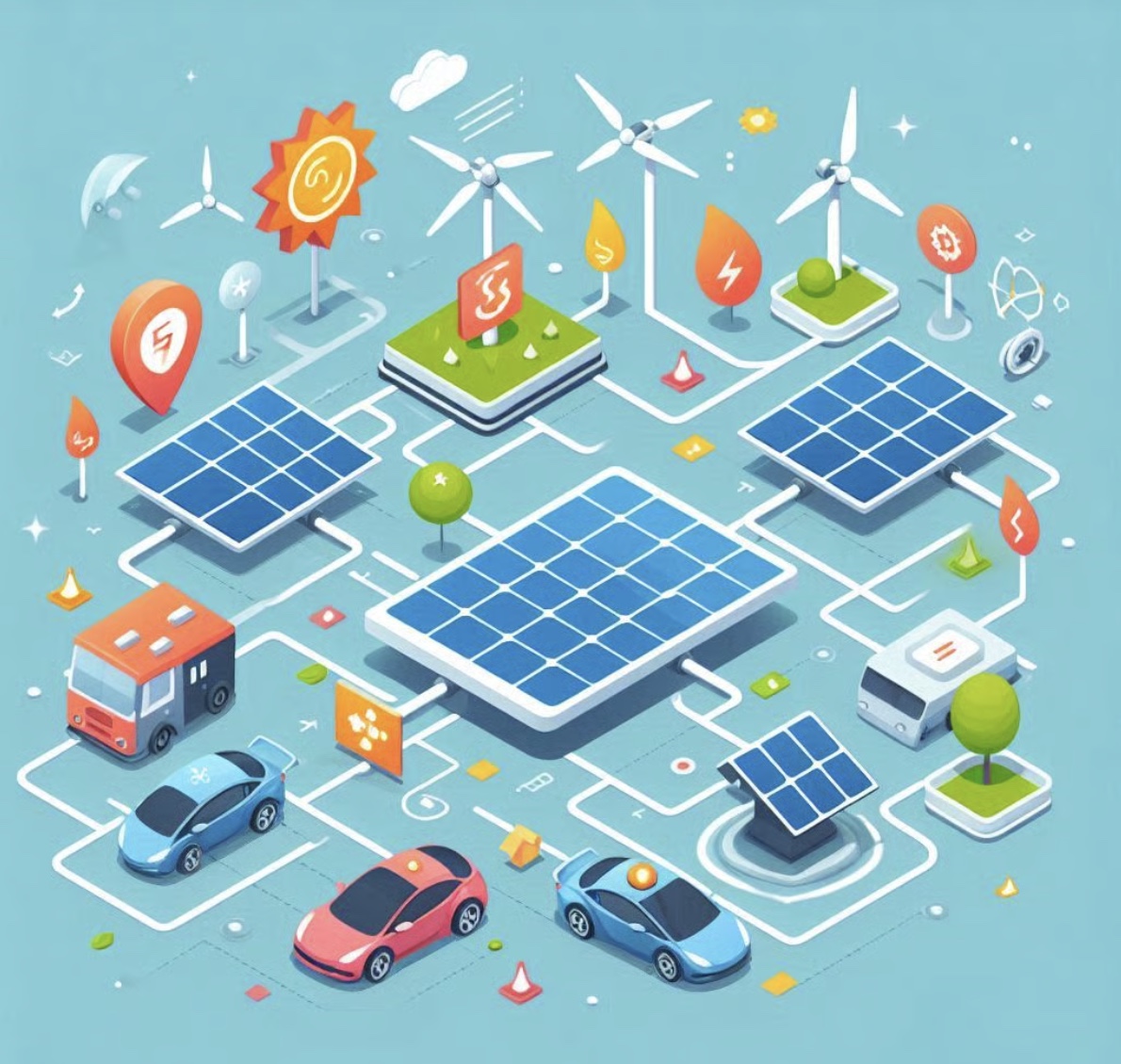
Smart Grid for Non-Engineers
Concepts and Components of a Smart Grid and Its Relevance with Renewable Energies
£11850.00
Course Overview
The transition towards smarter, cleaner, and more resilient energy systems is transforming the way electricity is generated, distributed, and consumed. Smart grids combine digital technologies, advanced monitoring, automation, and renewable energy integration to improve the reliability, efficiency, and sustainability of modern power systems.
This course provides a practical introduction to smart grids for participants without an engineering background. It explains the fundamental concepts of electricity networks, renewable energy technologies, smart metering, energy storage, and consumer participation in an accessible, non-technical manner. Participants will gain an understanding of how smart grids support the energy transition, facilitate the integration of renewable energy sources, and enable more efficient energy management for homes, businesses, and communities.
Who Should Attend?
This course is suitable for:
Managers and administrators working in the energy sector
Policy and regulatory professionals
Project managers
Health, safety and environmental personnel
Maintenance and operations staff
Sustainability professionals
Anyone seeking a practical understanding of smart grid technologies without an engineering background
Learning Outcomes
By the end of the course, participants will be able to:
Explain the principles and operation of smart grid systems.
Understand the fundamentals of electricity generation, transmission, and distribution.
Describe the role of renewable energy within modern power networks.
Recognise the applications of smart meters, smart homes, and demand-side management.
Explain the importance of energy storage technologies and electric vehicles.
Identify the opportunities and challenges associated with smart grid implementation.
Course Content
Module 1: Fundamentals of Electrical Power Systems
Electricity generation, transmission, and distribution
AC and DC power
Basic electrical concepts and terminology
Domestic and industrial power systems
Module 2: Renewable Energy Technologies
Solar photovoltaic systems
Wind energy
Biomass and geothermal energy
Renewable energy integration
Module 3: Smart Grid Technologies
Principles of smart grids
Grid digitalisation and automation
Smart grid architecture
Microgrids and distributed energy resources
Module 4: Smart Energy Management
Smart homes and intelligent buildings
Smart meters
Consumer participation and demand response
Energy efficiency and sustainability
Module 5: Emerging Technologies
Energy storage systems
Battery technologies
Electric vehicles
Smart sensors and monitoring systems
Future developments in intelligent energy networks
Course Benefits
Participants will develop a broad understanding of smart grid technologies and their role in the future of energy systems. The course equips non-technical professionals with the knowledge needed to engage confidently with smart energy projects, support organisational decision-making, and understand the technological, environmental, and societal implications of the global energy transition.
Language(s): English or Arabic
Duration: One week
Teaching Format: In person
Certificate of Completion: Upon successful completion of the program, participants will receive a Certificate of Completion.
Customised training courses
Customised training courses are available upon request, allowing for tailoring to specific organisational needs, goals, and branding.
London-standard professional pathways and applied knowledge.
Explore Our Services
© 2026 London International Training Academy - Registered in England and Wales.
Practical career-ready training.